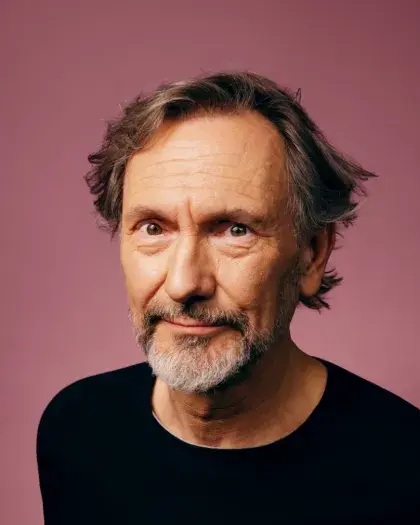
Singulis / La seule certitude que j'ai, c'est d'être dans le doute
by Pierre Desproges
Directed by Alain Lenglet and Marc Fayet
Concepted and performed by Christian Gonon

Discover the play
-
Voilà 30 ans, Pierre Desproges disparaissait « emporté à son insu par un crabe affamé qui lui broutait le poumon ». Du Petit Rapporteur, où il débute en 1975, aux seuls-en-scène des dernières années, l’écriveur à l’humour noir et singulier aura prouvé que oui, on peut rire de tout… mais pas forcément avec tout le monde. Il y a une dizaine d’années, Christian Gonon lui avait consacré une carte blanche, reprise plusieurs fois depuis, réunissant des extraits des Chroniques de la haine ordinaire, quotidiennes diffusées sur France Inter en 1986, de La Minute nécessaire de Monsieur Cyclopède, irrésistible série créée en 1982 pour FR3, et de son livre Vivons heureux en attendant la mort.
« De vrais sketches avec des vrais morceaux de bravoure entiers dedans reliés entre eux par une bassesse d’inspiration qui volera au-dessous de la ceinture du moindre nain », annonçait Desproges pour son spectacle en 1986. Christian Gonon, dans une lettre adressée à l’auteur après sa mort, définit son seul-en-scène : « Ce serait tout ce que je préfère de toi, que je pourrais faire entendre sur une scène de théâtre. Une alliance fraternelle. Tu serais venu à la première et tu m’aurais dit avec ton sourire cyclopéen : “Desproges à la Comédie-Française… étonnant, non ?” Et je t’aurais répondu : “Non.” »Le texte du spectacle est publié au Seuil (collection « Point ») sous le titre Le doute m’habite.
Il est disponible à la Boutique.Christian Gonon remercie
Hélène Desproges, pour la confiance qu’elle a bien voulu lui accorder
Marie-France Manoncourt, pour son sublime Château-Figeac
Lemercier Yvette, du Vésinet, pour son amour des bêtes…LA PRATIQUE THÉÂTRALE DU SOLO est relativement récente à la Comédie-Française. Depuis le XVIIe siècle, l’institution se définit d’abord en tant que troupe de comédiens dont la dimension collective prime sur l’expression des individualités. Samuel Chappuzeau dans son Théâtre François le souligne dès 1674, comparant les troupes théâtrales à des « corps » politiques, comme autant de petites « Républiques ». Des comédiens, il dit qu’« ils n’admettent point de supérieur, le nom seul les blesse ; ils veulent tous être égaux, et se nomment camarades. » La devise de la Comédie-Française, Simul et Singulis (être ensemble et être soi-même), qui apparaît en 1682, assortie de l’emblème à la ruche bourdonnante, caractérise cette philosophie où chacun contribue par son talent propre à l’œuvre collective.
Point de solo… mais des solistes
Si la pratique du spectacle seul-en-scène n’est pas de mise, le « solo » que constitue le monologue est fort attendu du public et, parfois, mis en scène pour faire apparaître le protagoniste dans toute sa splendeur et en contraste avec le reste de la Troupe. Il s’agit là d’un effet du système de vedettariat qui émerge nettement au XIXe siècle.
Les pratiques solistes se développent le plus souvent en dehors de l’activité du théâtre. Les comédiens, dans des tournées personnelles programmées parfois sans égard pour les intérêts de la Comédie-Française – Talma, Rachel... ont pu partir en laissant leurs camarades en difficulté – emmènent leurs malles de costumes, mais recrutent sur place comparses et décors de fortune pour jouer les grandes scènes de leur répertoire. La représentation s’apparente alors à un récital de morceaux choisis, propre à mettre en valeur l’acteur dont le talent est d’autant mieux affirmé qu’il évolue aux côtés de comédiens de seconde zone, si ce n’est d’amateurs.
Le texte monologué se développe véritablement à la fin du XIXe siècle, grâce aux frères Coquelin mais reste aujourd’hui encore une exception. La devise, Simul et Singulis, résume à elle seule l’indispensable paradoxe pour un acteur de Troupe.- Visuel : ruche, gravure Guillaumot fils
-
Conception et interprétation : Christian Gonon
Mise en scène : Alain Lenglet et Marc Fayet
Lumières : Éric Dumas
Musique originale : Jérôme Destours
Documents
-
 Télécharger le PDF (610.24 KB)
Programme Singulis : La seule certitude que j'ai, c'est d'être dans le doute 18/19
Programme Singulis Seul-en-scène La seule certitude que j’ai, c’est d’être dans le doute de Pierre Desproges. Conception et interprétation Christian Gonon. Du 16 janvier au 3 février 2019 au Studio-Théâtre.