
Discover the play
-
Mais si on retire la musique de Lully et sa légèreté, on découvre un drame cruel où une jeune femme est sacrifiée sur l’autel du profit par ses parents de petite noblesse désargentée. C’est aussi l’humiliation sociale d’un paysan parvenu par cette même aristocratie, le mépris des femmes par les hommes, des valets par leurs maîtres. Bref, la cruauté des humiliés.
On rit comme dans toute comédie de Molière, mais celle-ci ne se termine pas par un mariage mais par un constat amer, une défaite collective.
Est-ce une farce ? Est-ce un drame ?
Une comédie humaine tragiquement lucide.C’est un conflit de générations et de lutte de classes sociales. J’aimerais donc opposer deux générations de comédiens – la jeunesse d'Angélique, Claudine, Clitandre, Lubin, Colin à la maturité de M. et Mme de Sotenville. Et Dandin pour incarner cette lutte de classe entre les Sotenville, leur fille et Clitandre contre Dandin, Claudine, Lubin et Colin. L’humiliation est aussi entre les générations, les genres, les statuts sociaux : Dandin humilie Claudine, Colin, Angélique ; les Sotenville humilient Dandin mais le sont eux-mêmes par Clitandre, qui sera féroce avec Dandin et méprisant avec Lubin ; Angélique se venge et humilie Dandin avec l’aide de Claudine ; Clitandre a-t-il vraiment de l’amour pour Angélique ou s’en amuse-t-il ?
Nous serons à la table de George Dandin, pour la lecture des signes de ce couple humiliant-humilié avec un public présent ou supposé tel. »Hervé Pierre
Cette présentation « À la table en public » de George Dandin est dédiée à Simon Eine, décédé le 30 septembre 2020 et qui joua avec intensité le rôle de Colin au Théâtre du Vieux-Colombier en 2014.
Avec le mécénat de François Jerphagnon
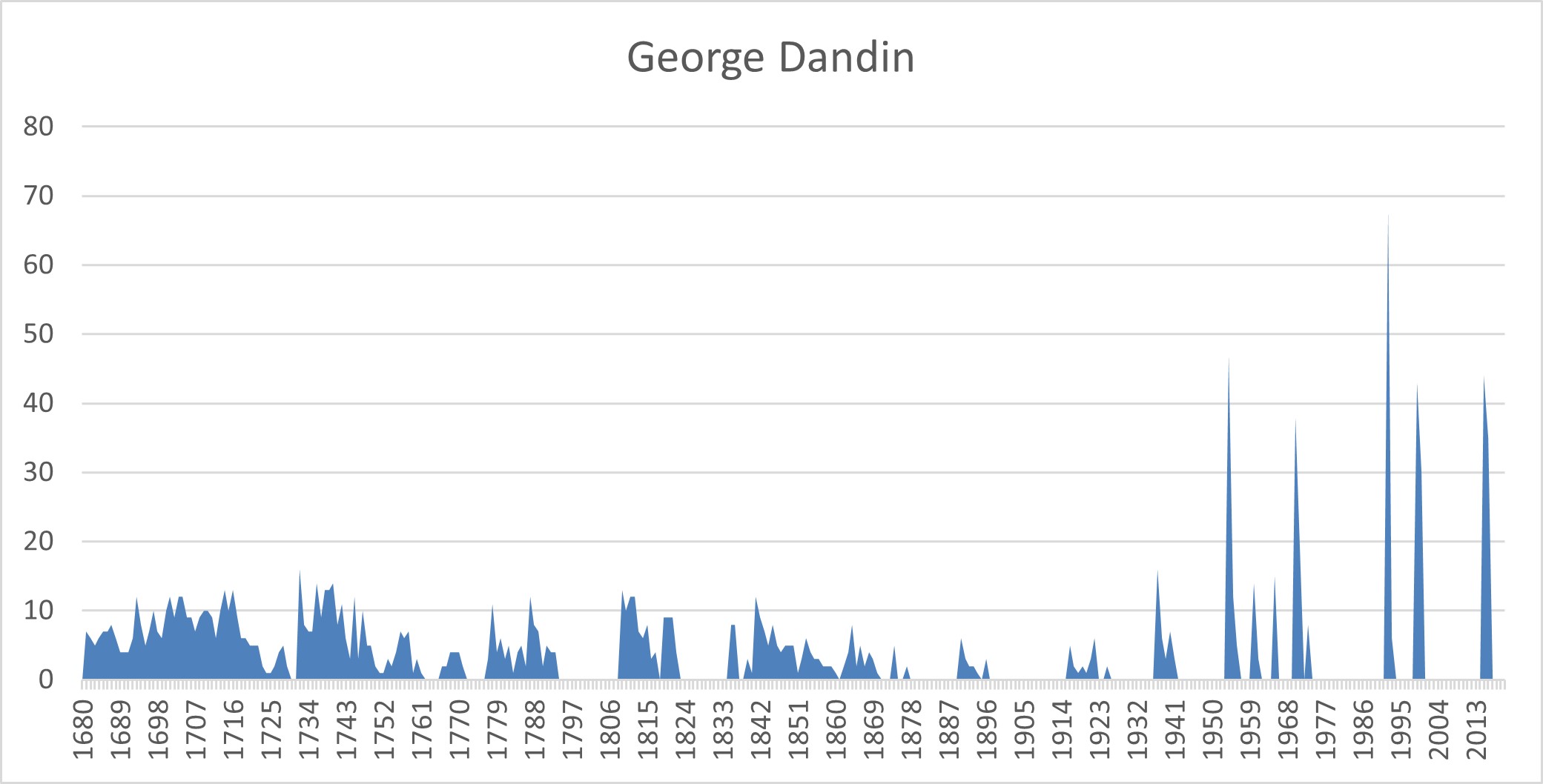
George Dandin ou le Mari confondu a été créé le 18 juillet 1668 au Théâtre de verdure du Petit parc à Versailles avec Molière dans le rôle-titre. La pièce a ensuite été représentée 39 fois jusqu’à la mort du dramaturge, puis 1 371 fois depuis son entrée au répertoire de la Comédie-Française, le 17 février 1681.
La pièce est jouée très régulièrement jusqu'en 1793, à raison de quelques représentations par an, puis reprise à un rythme beaucoup plus irrégulier jusqu'en 1896, connaissant même quelques éclipses, notamment dans la période post-révolutionnaire, entre 1794 et 1808. Jusqu'à la fin du XIXe siècle, la carrière de la pièce porte également la marque de ses grands interprètes, notamment les Bonneval, Des Essarts, Grandville, Provost, tous dans une tradition de jeu farcesque, puis Edmond Got qui, en 1874, souligne pour la première fois l’aspect tragique du mari bafoué.
De 1897 à 1937, la pièce disparaît de l’affiche, en dehors de quelques représentations données entre 1916 et 1925.
La carrière de la pièce est ensuite liée à ses mises en scène :
- Charles Dullin, 1937
- George Chamarat, 1954. Michel Galabru y fait ses débuts officiels dans le rôle-titre.
- Jean-Paul Roussillon, 1970 (pièce couplée avec Il ne faut jurer de rien d’Alfred de Musset, mis en scène par Michel Duchaussoy)
- Jacques Lassalle, 1992 (pièce enchâssée dans La Comtesse d’Escarbagnas)
- Catherine Hiegel, 1999 (Théâtre du Vieux-Colombier)
- Hervé Pierre, 2014 (couplée avec La Jalousie du Barbouillé l’année suivante)
-
Direction artistique : Hervé Pierre
Réalisation : Clément Gaubert
Casting
-
Clitandre, amoureux d’Angélique