
Discover the play
-
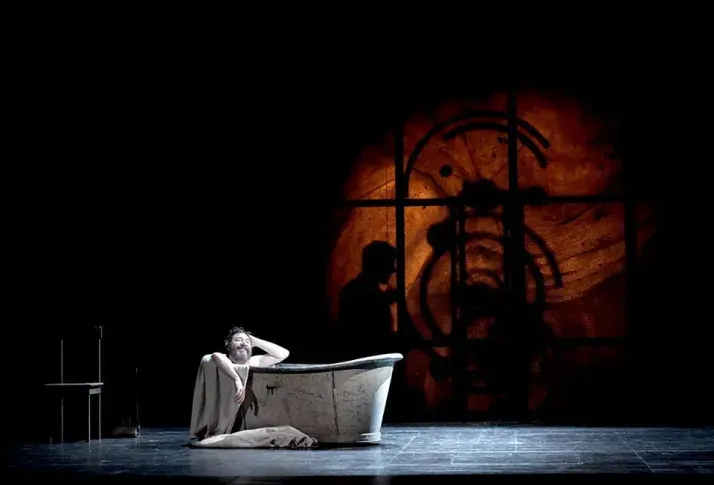
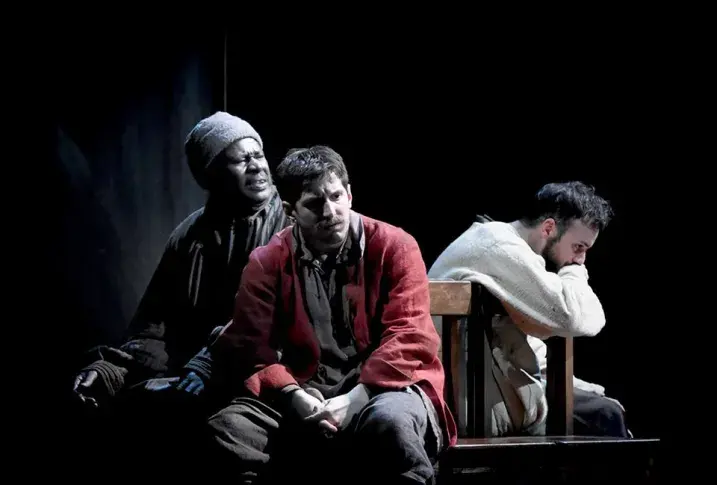
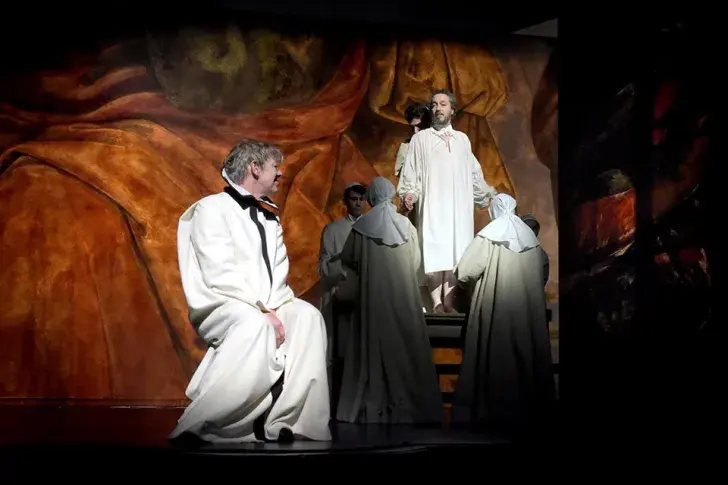
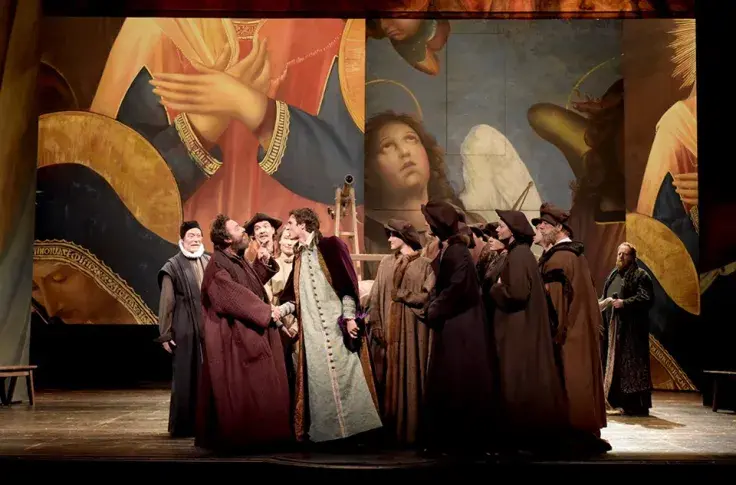
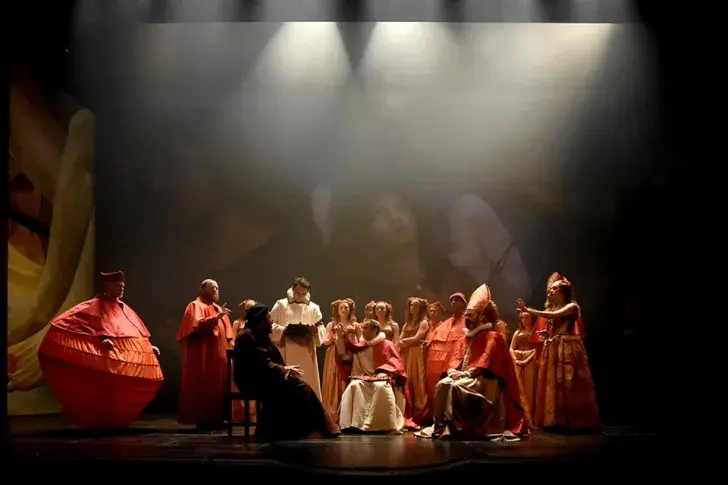
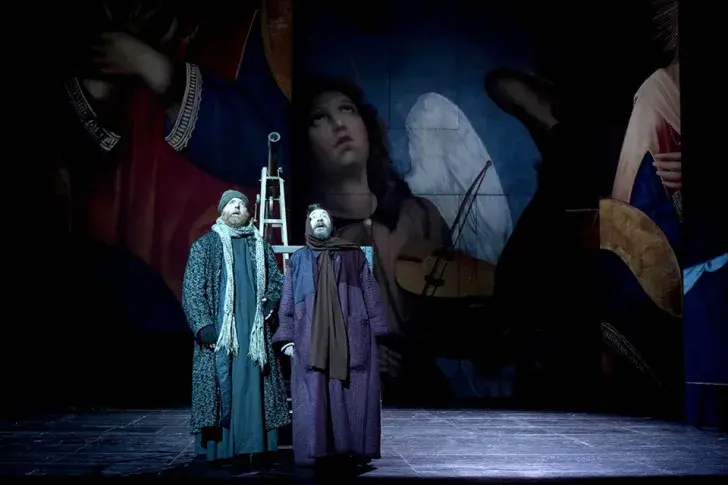
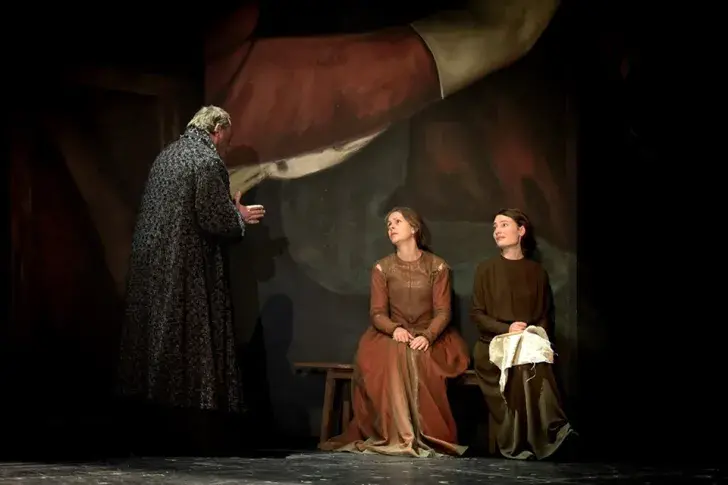
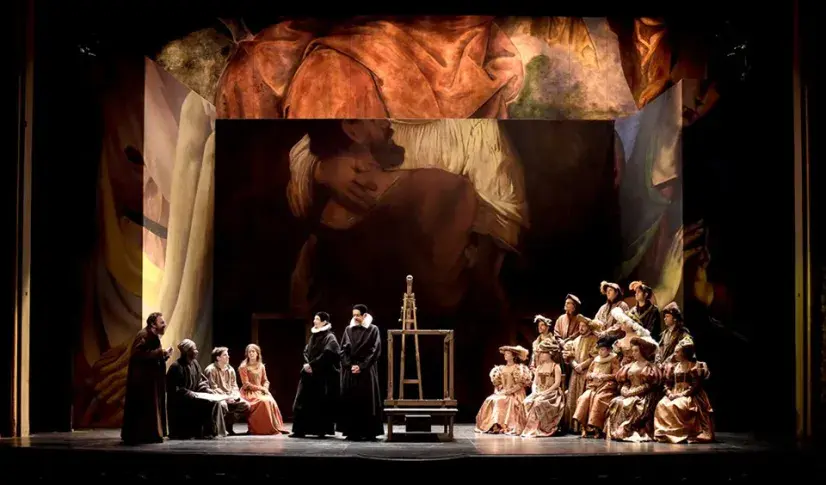
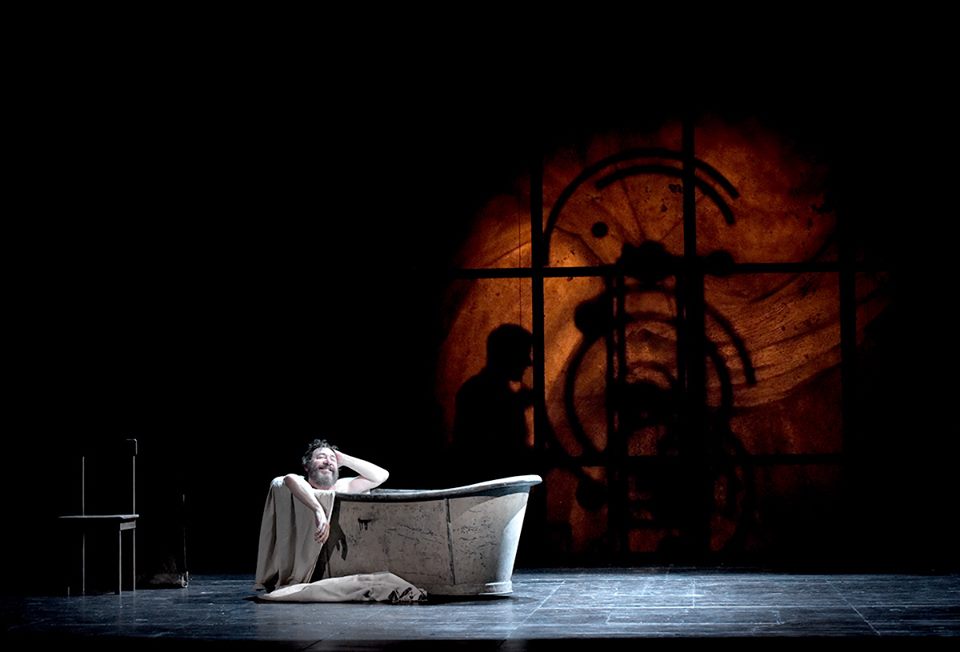
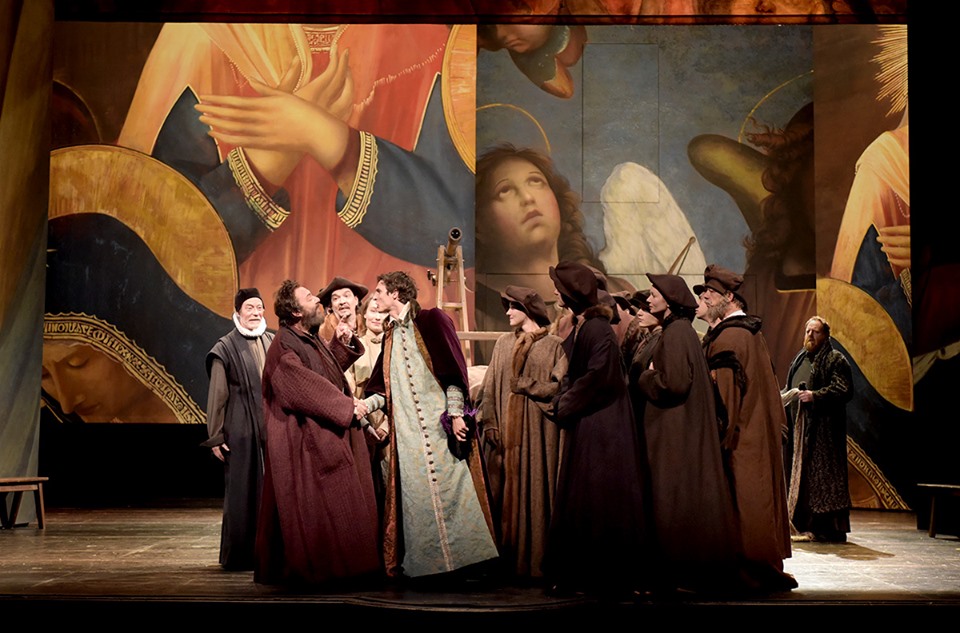
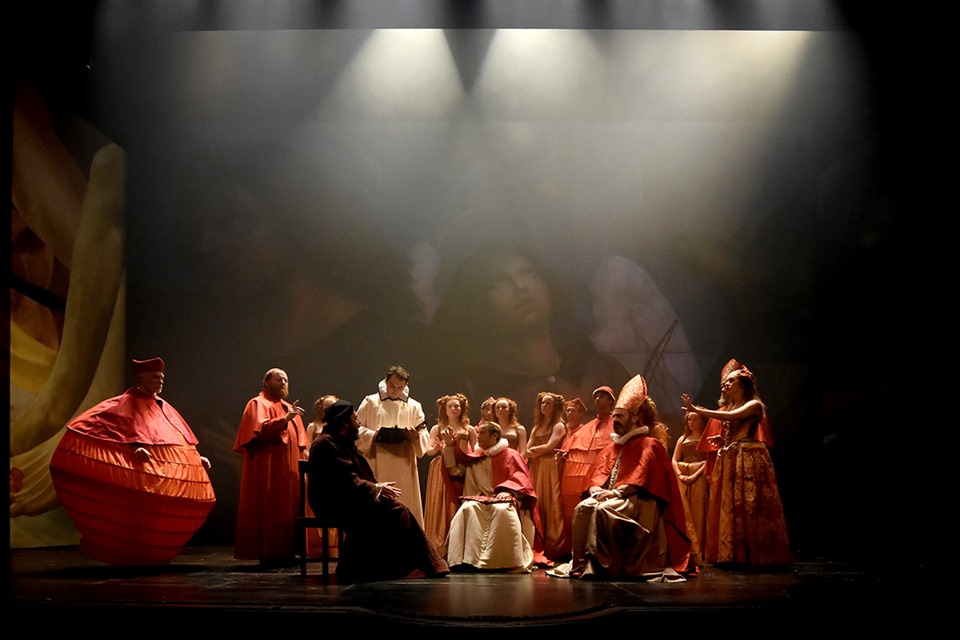
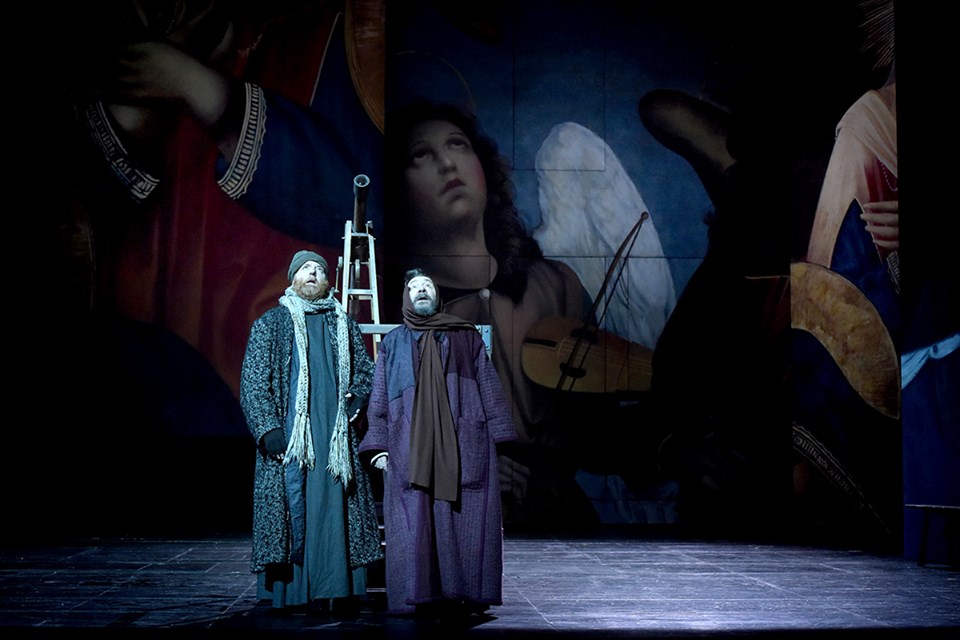
« Aujourd’hui, 10 janvier 1610, l’humanité inscrit dans son journal : ciel aboli » : accompagné d’un enfant, le mathématicien Galilée observe à la lunette le firmament. Dix ans auparavant, le philosophe Giordano Bruno a été brûlé à Rome pour avoir soutenu l’idée d’un univers infini et sans centre, sur la base des travaux de Copernic. À force d’observations et de calculs, Galilée cherche des preuves à son hypothèse d’un système cosmique où la Terre est « un corps céleste ordinaire, un parmi des milliers ». De Padoue à Venise, le mathématicien ébranle des certitudes en affrontant la puissance d’une Église qui souhaite maintenir son pouvoir absolu dans les «sphères de cristal» où Ptolémée a jusque-là enfermé le monde. Si les découvertes de Galilée sur l’astronomie et la physique passionnent le peuple, le savant les abjurera sous la menace de la torture. L’Inquisition aura eu raison de lui, non de sa science.
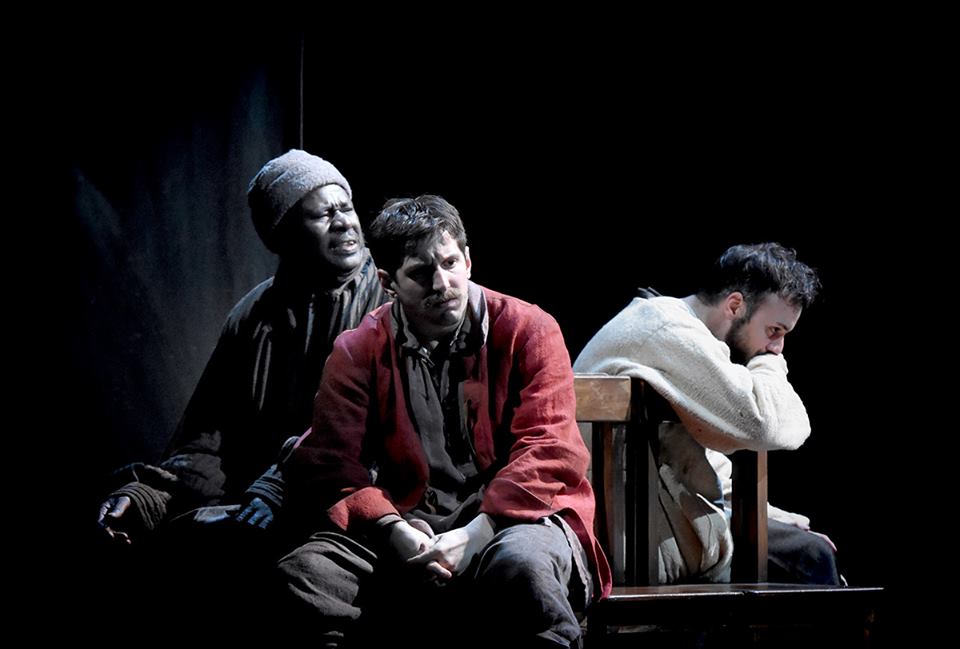
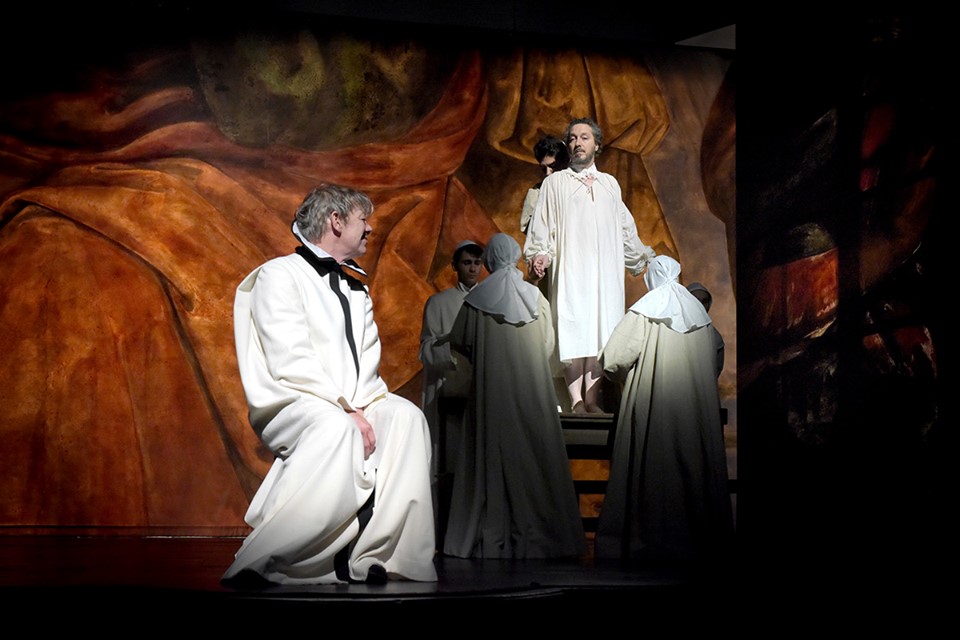
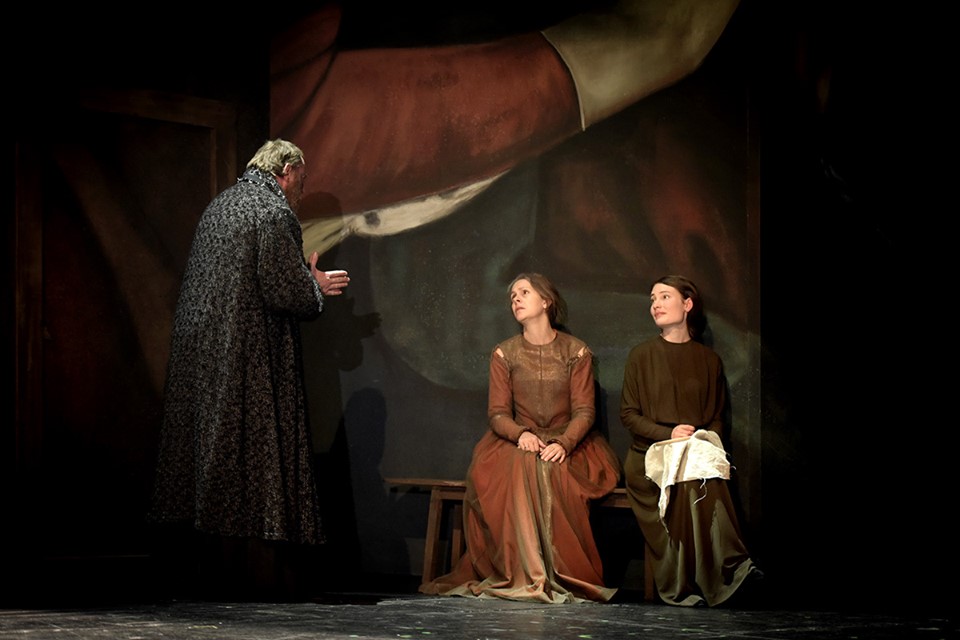
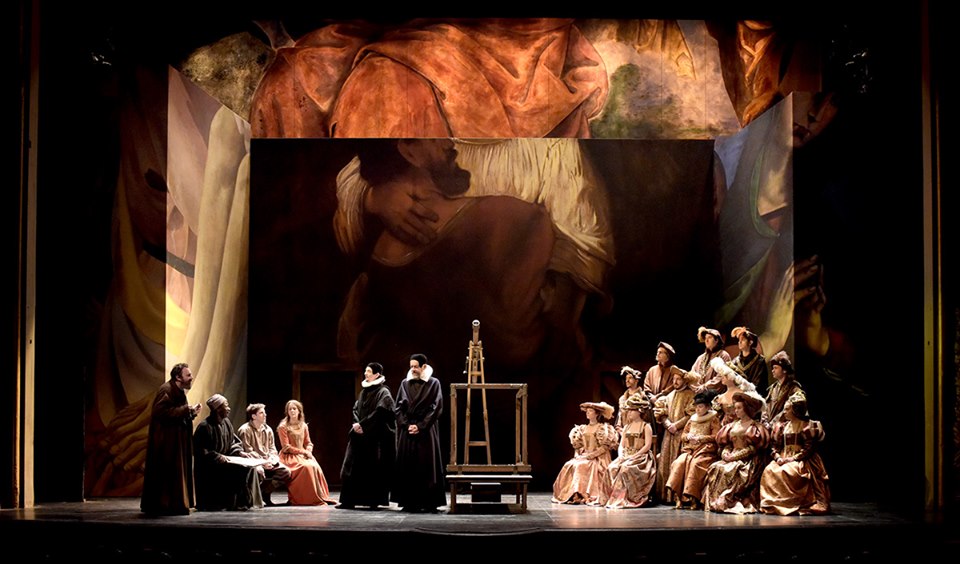
De cette pièce que l’on a pu dire prophétique – Brecht en débute la rédaction en exil au Danemark en 1938 et la finalise en 1955 –, Antoine Vitez relève la complexité du personnage de Galilée : « Je n’ai besoin ni de le sauver ni de ne pas le sauver, je n’ai besoin, moi, que de le traiter ». C’est dans la lignée, près de trente ans après la dernière mise en scène qui marqua l’entrée au Répertoire du texte, qu’Éric Ruf s’intéresse à cette parole sur la nécessité fondamentale du doute. Pour cette pièce de troupe en quinze tableaux, il retrouve Hervé Pierre, « acteur-monde » qui interprétait son Peer Gynt en 2012. Loin du traité, hors de tout manichéisme mais embrassant la connaissance, la crédulité, la foi, l’éthique ou la science, ce portrait d’un homme énonce, à travers un long parcours de vie, les paradoxes de la conquête de l’esprit.NOUVELLE PRODUCTION
Avec le mécénat d'Allianz FranceBrecht à la Comédie\-Française
BERTOLT BRECHT ENTRE TARDIVEMENT AU RÉPERTOIRE de la Comédie-Française. Antigone est jouée, en 1972, hors Répertoire, au Théâtre de l’Odéon – dont l’administrateur, Pierre Dux, assume pour partie la programmation –, dans une mise en scène de Jean-Pierre Miquel. Puis, Salle Richelieu, le public peut voir Maître Puntila et son valet Matti dans une mise en scène de Guy Rétoré, en 1976. La Vie de Galilée est montée par Antoine Vitez, alors administrateur général, en 1990, quelques semaines avant son décès. La pièce écrite entre 1938 et 1939, retravaillée jusqu’en 1954, se fait l’écho des interrogations de l’époque sur les progrès de la science, qui ne doivent pas perdre de vue que son but est la diminution de la misère humaine. En effet, entre 1938 et 1954, l’humanité a dû faire face à l’émergence de la menace atomique. Mère Courage entre au Répertoire en 1998 (mise en scène de Jorge Lavelli), L’Opéra de quat’sous en 2011 (mise en scène Laurent Pelly), La Résistible Ascension d’Arturo Ui en 2017 (Katharina Thalbach), tandis que La Noce est montée par Isabelle Osthues au Théâtre du Vieux-Colombier en 2011.
Héros de grandes causes, femmes et hommes de conviction
La Vie de Galilée de Brecht oppose savoir et vérité à l’obscurantisme et au dogmatisme du pouvoir religieux. Si savants et hommes de science sont peu représentés dans le répertoire théâtral, d’autres héros portent des causes de nature différente.
Les causes patriotiques et politiques mettent en balance le courage des faibles, leur soif de liberté et de justice, contre la loi du plus fort : Antigone (chez Sophocle ou Anouilh), Spartacus (Bernard-Joseph Saurin, 1760), Guillaume Tell (Antoine-Marin Lemierre, 1766), Du Guesclin ainsi que Jeanne d’Arc sont donc ces héros politiques.
Si la religion opprime, comme dans La Vie de Galilée où elle proscrit pour hérésie un scientifique, le théâtre peu à l’inverse illustrer l’oppression dont elle est l’objet. La vie des saints et des personnages de la bible constitue le sujet principal du théâtre médiéval (les mystères). Quand est créée la Comédie-Française, le genre a disparu, mais certaines pièces scénarisent les martyrs et érigent en héros les protagonistes de ces luttes, comme Polyeucte de Pierre Corneille ou encore la tragédie chrétienne Cassius et Victorinus, martyrs de La Grange-Chancel (1732) ou Le Véritable Saint-Genest, comédien et martyr de Jean de Rotrou (pièce de 1644, entrée au Répertoire en 1988). La Passion d’Edmond Haraucourt, en 1930, reprend la configuration des mystères médiévaux. La défense de la liberté religieuse génère aussi une littérature dramatique : Jean Calas de Jean-Louis Laya (1790) qui dénonce les attaques contre les protestants, Port-Royal de Montherlant (1954) qui illustre celles contre les jansénistes. À l’opposé, Dom Juan athée affirme sa volonté de ne pas croire.
Les causes sociétales sont également abordées par le Répertoire : les droits des gens de couleur dans L’Esclavage des nègres d’Olympe de Gouges, la place de la femme dans la société dans La Maison de poupée d’Ibsen, l’oppression de l’homosexualité dans le théâtre de Genet.
L’opposition entre la vérité et le pouvoir aveugle est abordée par Shakespeare dans Hamlet, dont le héros est seul à « voir » une vérité cachée, le meurtre de son père par Claudius qui a pris sa place à la tête du Royaume et dans le cœur de Gertrude.Mais la pièce de Brecht est fondamentalement originale dans la mesure où la conviction de Galilée (l’héliocentrisme, contre le géocentrisme prôné par l’Église) repose sur des faits, sur la science, sur des démonstrations, qui font apparaître d’autant plus violemment les contradictions de ses adversaires ; « Celui qui ne connaît pas la vérité, celui-là n'est qu'un imbécile. Mais celui qui la connaît et la qualifie de mensonge, celui-là est un criminel », affirme le protagoniste, reprenant l’une des phrase les plus célèbres du personnage historique.
De la même manière, les philosophes Socrate, Descartes et Rousseau apparaissent dans certaines pièces et défendent leur liberté de penser, parfois au péril de leur vie.Galilée, un des rares scientifiques du Répertoire, est décrit avant Brecht par François Ponsard (1867) dans une pièce homonyme qui défraie la chronique et voit se déchaîner contre elle l’opposition cléricale.
- Visuel : Galilée, 3e acte, texte de François Ponsard, décor de Rubé et Chaperon, 1867 – photo. © P. Lorette, coll. Comédie-Française
-
Mise en scène et scénographie : Éric Ruf
Traduction : Éloi Recoing
Costumes : Christian Lacroix
Lumière : Bertrand Couderc
Musique originale : Vincent Leterme
Son : Colombine Jacquemont
Travail chorégraphique : Glysleïn Lefever
Collaboration artistique : Léonidas Strapatsakis
Assistanat à la mise en scène : Alison Hornus
Assistanat à la scénographie : Julie Camus
Assistanat aux costumes : Jean Philippe Pons
Assistanat à la lumière : Lila Meynard
Documents
-
 Télécharger le PDF (12.33 MB)
Programme La Vie de Galilée 18/19
Programme de « La Vie de Galilée » de Bertolt Brecht. Mise en scène Éric Ruf, Salle Richelieu (saison 2018/2019).
Casting
-
 Côme de Médicis, la Vieille Femme, la Première Dame de réputation internationale et Marchand
 -